Federal Trade Commission Redesign
A Federal Government Website Redesign UX/UI Case Study.
Project Overview
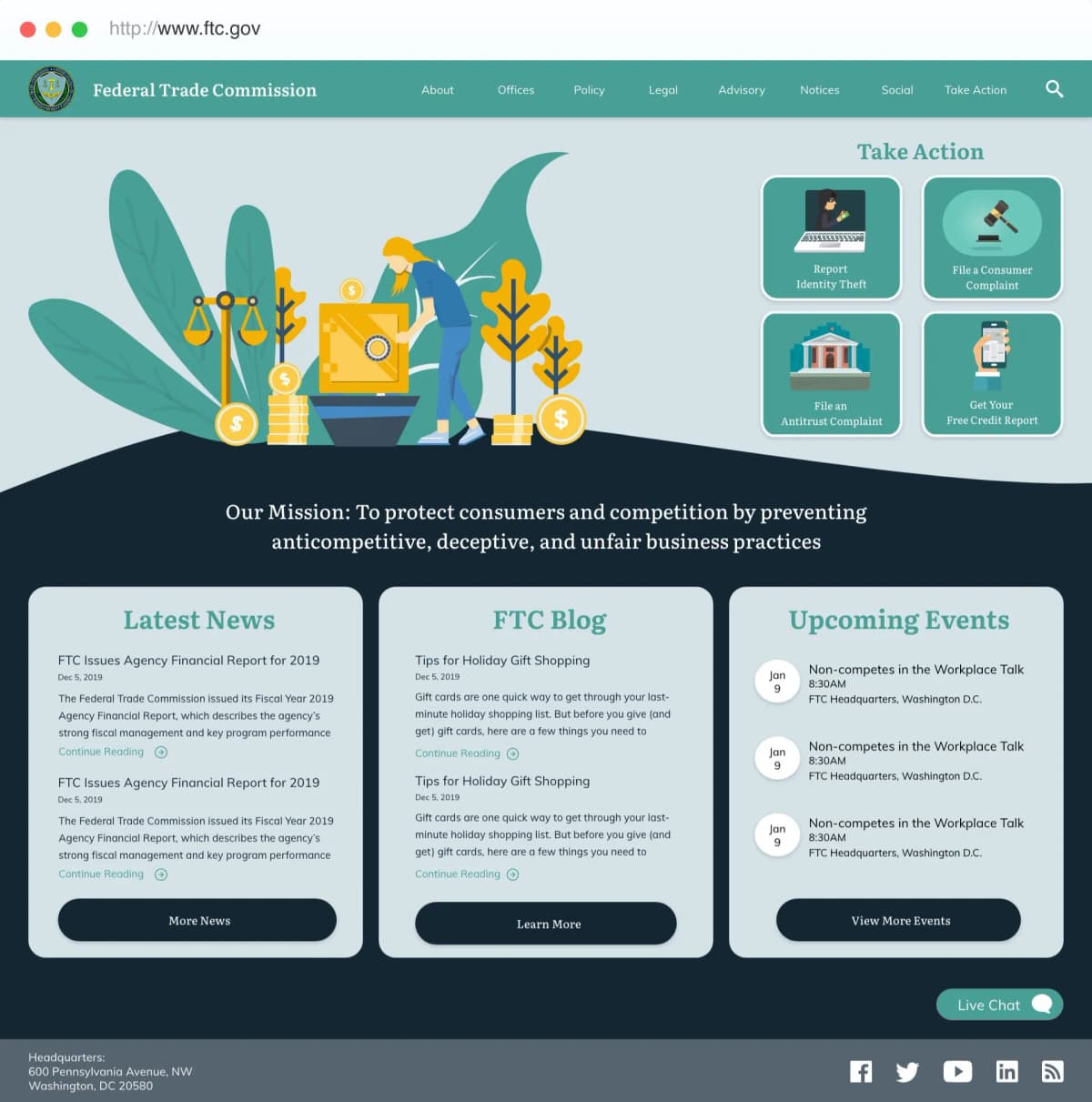
A comprehensive UX/UI redesign of the Federal Trade Commission website to improve accessibility and usability. The final version of this redesign prototype focused on a clean, yet professional color palette.
The U.S Federal Trade commission website has a confusing navigation system for users - that doesn't identify what the website can truly help with. Most of the time the website redirects it to a different website - causing the user confusion. The FTC is full of information from outside sources which disproves its credibility.
To fix this, we clean up the site architecture and its navigation, and integrate the identity theft reporting directly into the FTC site.
UX Designer and UX Researcher
Research-driven design project
Solo Project
Research and User Interviews
On the FTC website, we noticed that most of the links redirect to another website - rather than staying on the FTC site. It is as if the FTC website acts as an unnecessary hub for outside links. After interviewing 15 people, most users were confused and couldn't understand why they were forwarded to another site.
Revising the Sitemap
Card Sorting Results
Reorganized Sitemap
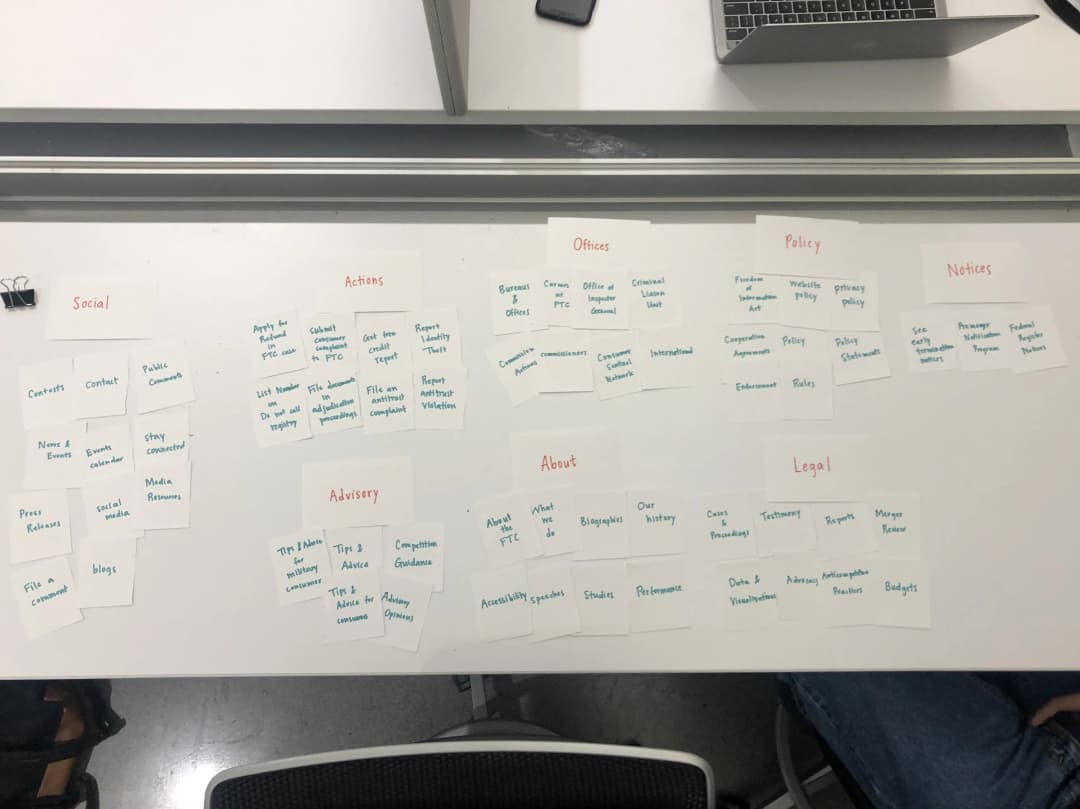
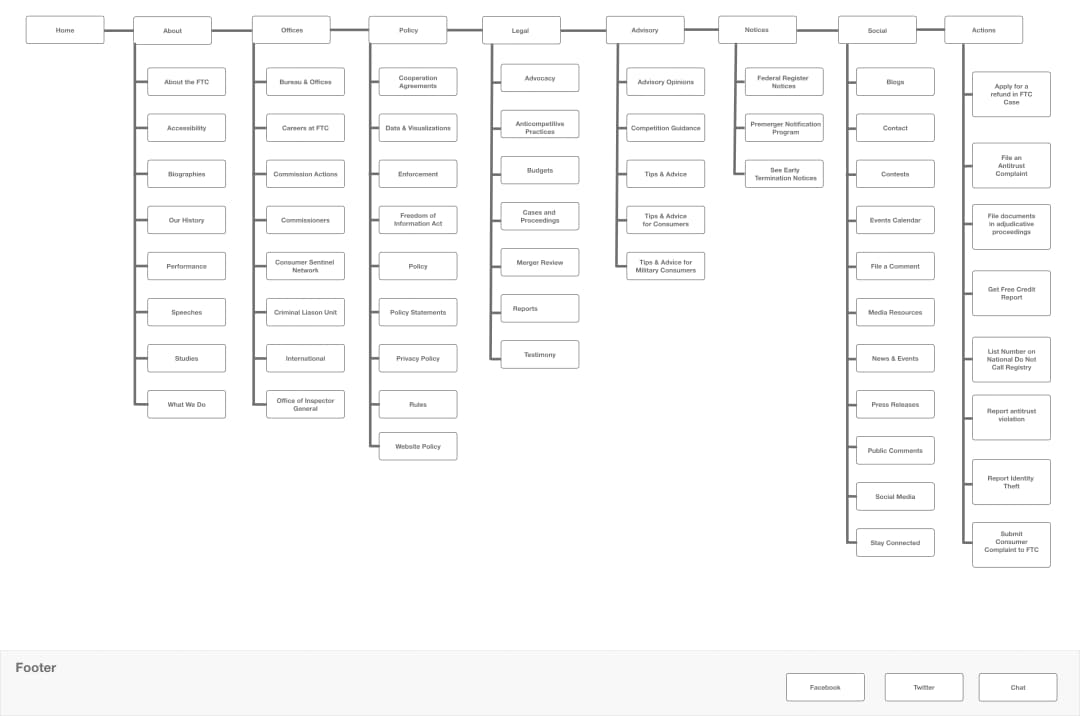
We used card sorting with users to understand their mental models for categorizing FTC content. This research informed our revised sitemap structure, which prioritized the most frequently accessed information and created logical groupings that matched user expectations. Previously, the homepage had over 10 confusing menus.
Low Fidelity Prototypes
Wireframe V1
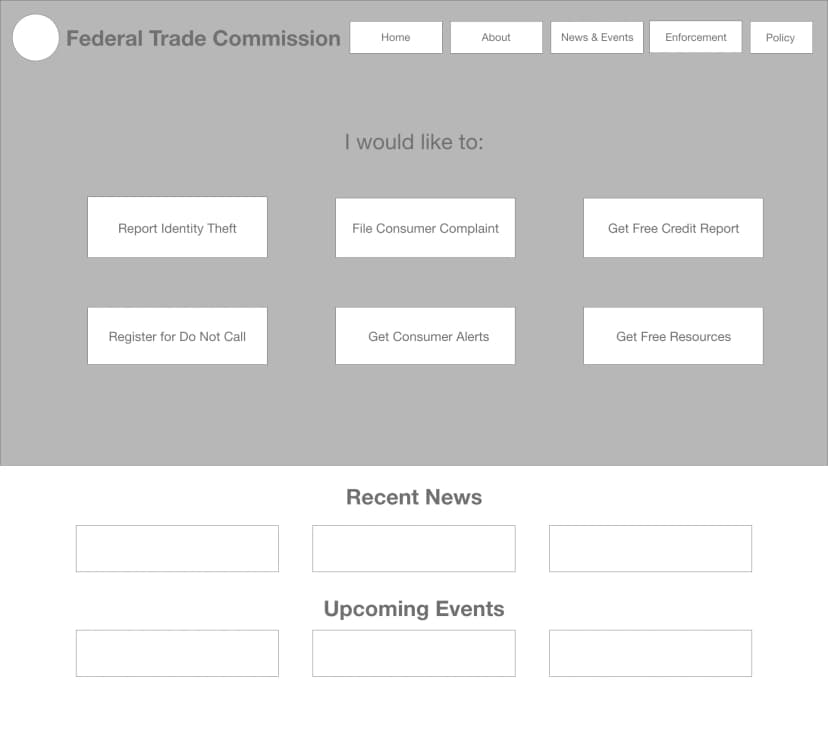
Wireframe V1 - B
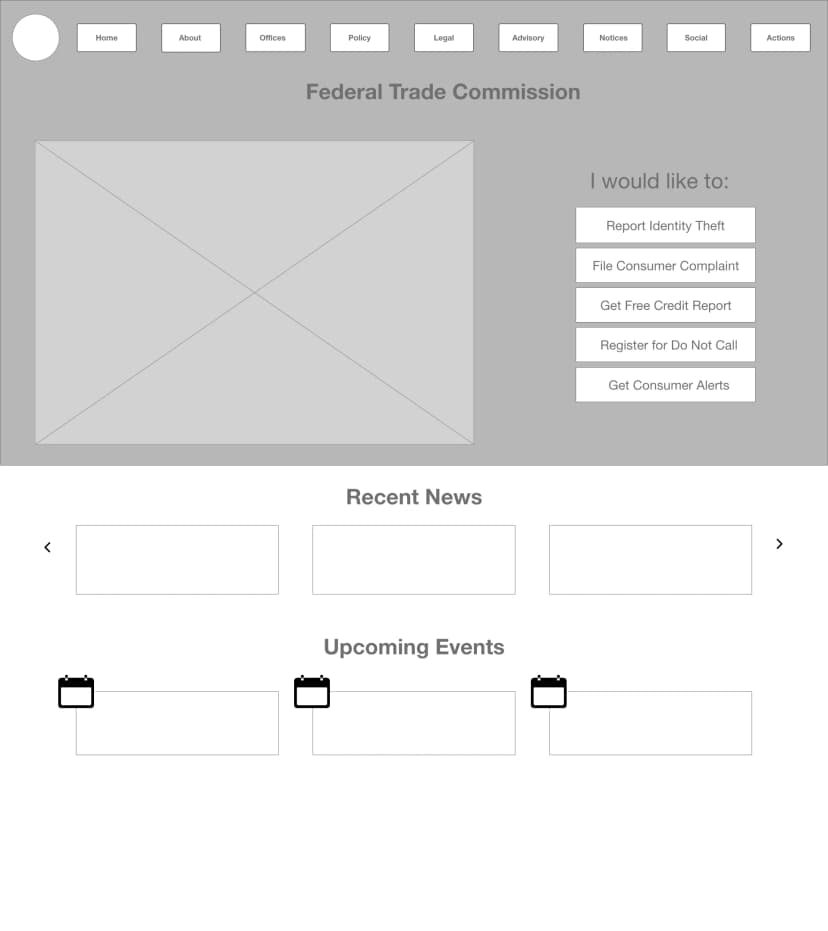
Our initial wireframes focused on establishing the new navigation structure and information hierarchy. We tested various layouts to determine what would work best for government website users, keeping accessibility and clarity as top priorities.
Medium Fidelity Prototypes - A/B Testing
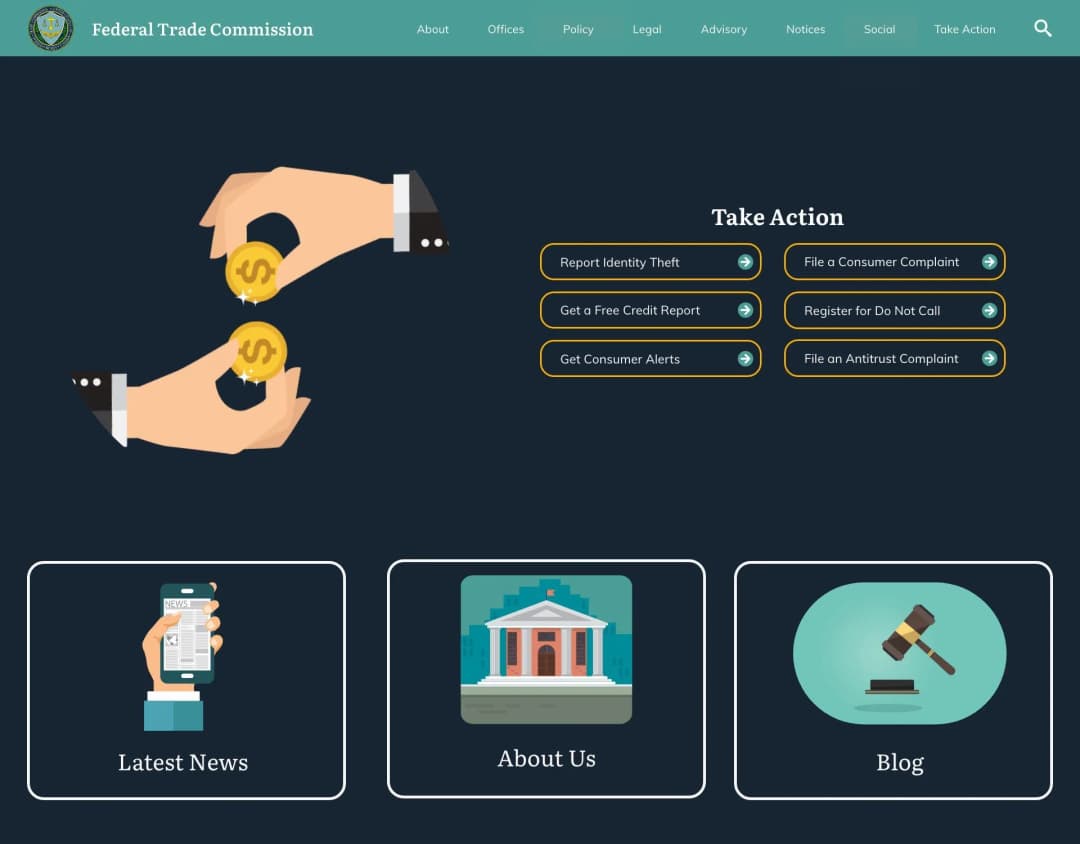
Test A: Hero image with large actionable buttons
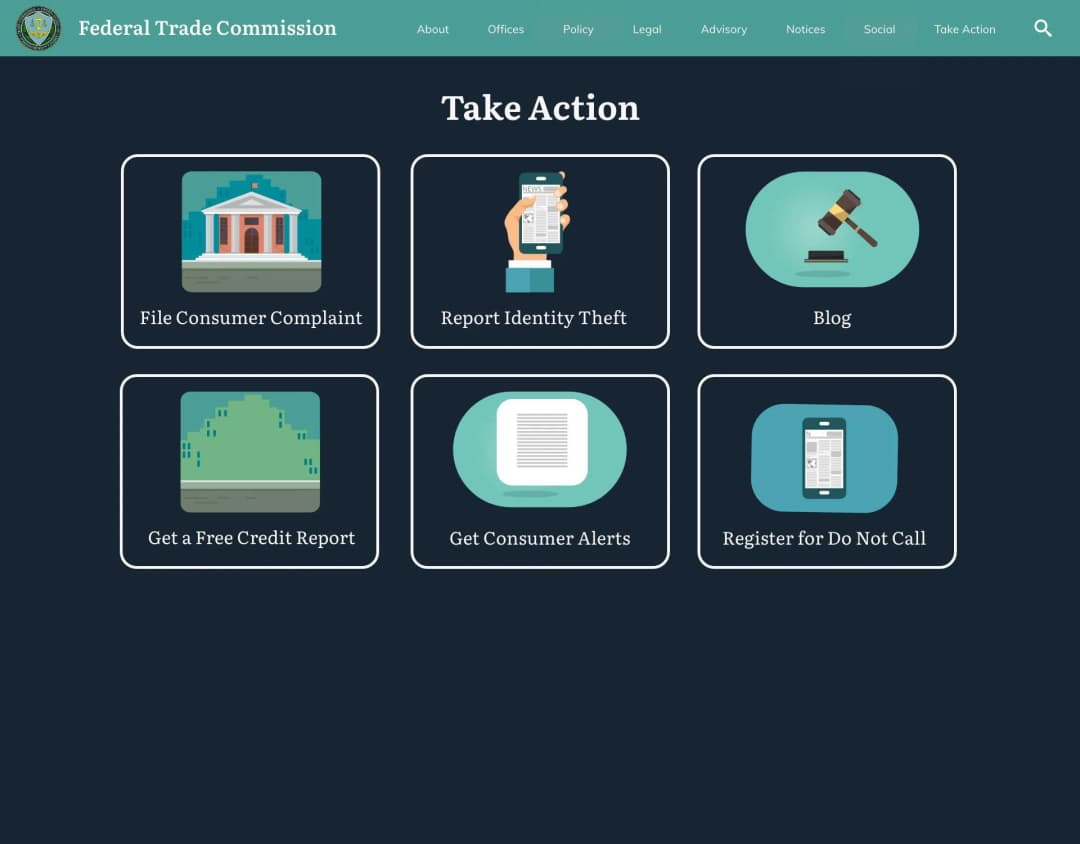
Test B: No hero image with only large actionable buttons
We created two design variations to test user preferences. Test A included a hero image with prominent call-to-action buttons, while Test B removed the hero image to focus entirely on actionable content. Both variations maintained the improved navigation structure identified in our research phase.
Moodboard
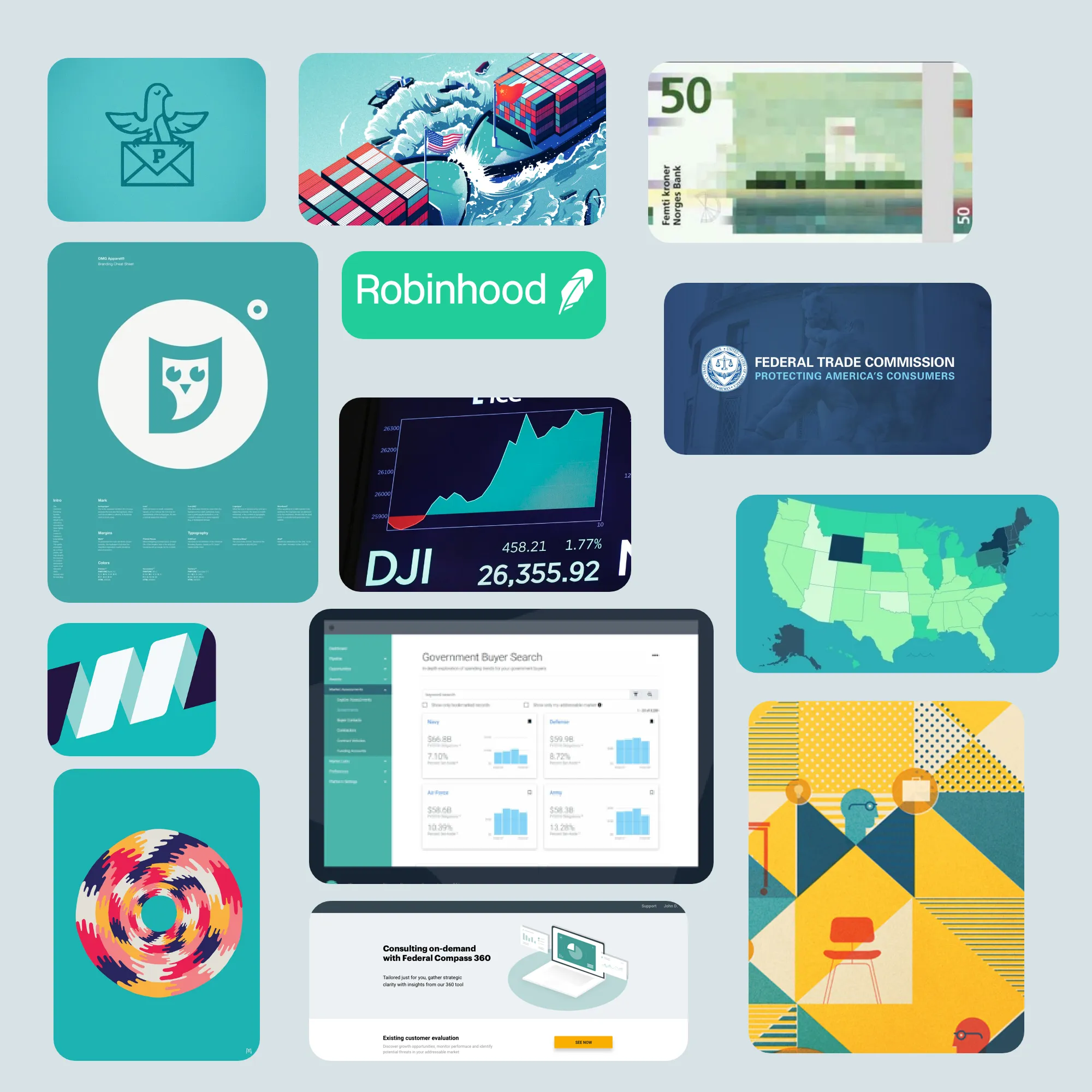
The moodboard established the visual direction for the redesigned FTC website, emphasizing trust, professionalism, and accessibility. We selected a modern color palette and typography that maintains government credibility while improving user engagement.
Style Guide
#4A9E96
Primary Teal
#F7AF03
Accent Yellow
#172432
Dark Navy
#D8E2E6
Light Grey
#59636D
Dark Grey



